


Hello world!
September 19, 2021
and
Rejuvenation
For
Nano Coating Solutions for Roofs & More in London: Protect and Extend Your Home’s Lifespan
Nano coating solutions create an ultra-thin, durable protective film that bonds at the microscopic level to external building materials, extending service life and resisting rain, UV, and biological growth. This article explains what nano coatings are, how nanoparticles form hydrophobic and UV-resistant barriers, and why these properties matter for London roof protection and broader exterior surfaces such as concrete and timber. Many London homeowners face accelerated roof wear from persistent damp, urban pollution, and moss or algae; nano coatings offer a cost-effective, eco-friendly alternative to premature replacement by slowing degradation and reducing maintenance. You will learn the science behind nanoparticle adhesion, quantified benefits like typical lifespan extension, material-by-material guidance for asphalt, metal, tiles, and elastomeric membranes, plus application steps, QA checks, and typical cost bands. The guide also covers complementary services—concrete sealer and wood surface protection—and explains how to compare nano coating to traditional replacements and sealants. Read on for step-by-step application advice, practical maintenance lists, and EAV comparison tables that clarify value for London homes.
What Is Nano Coating and How Does It Protect London Roofs and Surfaces?
Nano coating is a protective formulation made of engineered nanoparticles that chemically or physically bond to a surface, creating a thin, continuous film that repels water, resists UV, and inhibits biological growth. The mechanism works by nanoparticles filling microscopic pores and linking into a cohesive layer that changes surface energy, producing hydrophobicity and reflective properties that prevent water ingress and slow photodegradation. For London roofs and exteriors, this reduces moss and algae adherence and helps shed pollution soiling, delivering longer service life and lower cleaning frequency. Below we examine how nanoparticles form durable barriers, the key protective properties, and why eco-friendly chemistries matter for urban homes.
How Do Nanoparticles Create a Durable Protective Barrier?
Nanoparticles adhere through a combination of chemical bonding and mechanical interlocking, where tiny silica or polymer-based particles anchor into surface irregularities and cure into a continuous network that resists abrasion and water penetration. This film-like formation reduces micro-cracking and seals capillaries that normally absorb moisture, improving mechanical and chemical resistance under variable London weather. Laboratory and field testing typically measure contact angle, abrasion resistance, and accelerated UV exposure to quantify barrier performance and estimate lifespan gains. Understanding these adhesion and film-formation steps clarifies why proper surface preparation and curing are critical to achieve the full protective effect.
Nanocoatings in Modern Construction: High-Performance Materials for Buildings
Contemporary advancements in nanotechnology enable the classification of nanocoatings as high-performance materials, whose structure and properties can be engineered to meet specific functional criteria and environmental impact objectives. These materials exhibit unique and remarkable characteristics when compared to conventional coating materials used in the construction industry. The government’s ambitious initiatives for commissioning new housing and road infrastructure, alongside significant projects for Arctic development and national security assurance, are projected to stimulate overall industry growth and increase demand for more efficient, innovative building materials, including nanocoatings and nanopaints.
What Are the Key Properties of Nano Coatings: Waterproofing, UV Resistance, and Anti-Mold?
Nano coatings combine several protective properties that together preserve materials: superhydrophobicity reduces water uptake and freeze-thaw damage, UV-blocking additives slow polymer and granule breakdown, and biocidal or bio-resistant surface characteristics limit mold and algae colonization. Waterproofing prevents moisture-driven rot and substrate erosion; UV resistance reduces photochemical breakdown of shingles, membranes, and wood finishes; anti-mold features lower cleaning needs and deterioration rates in damp London microclimates. These properties translate into measurable outcomes: fewer repairs, less frequent cleaning, and extended material service intervals when coatings are correctly applied and maintained.
Why Are Eco-Friendly Nano Coatings Ideal for London Homes?
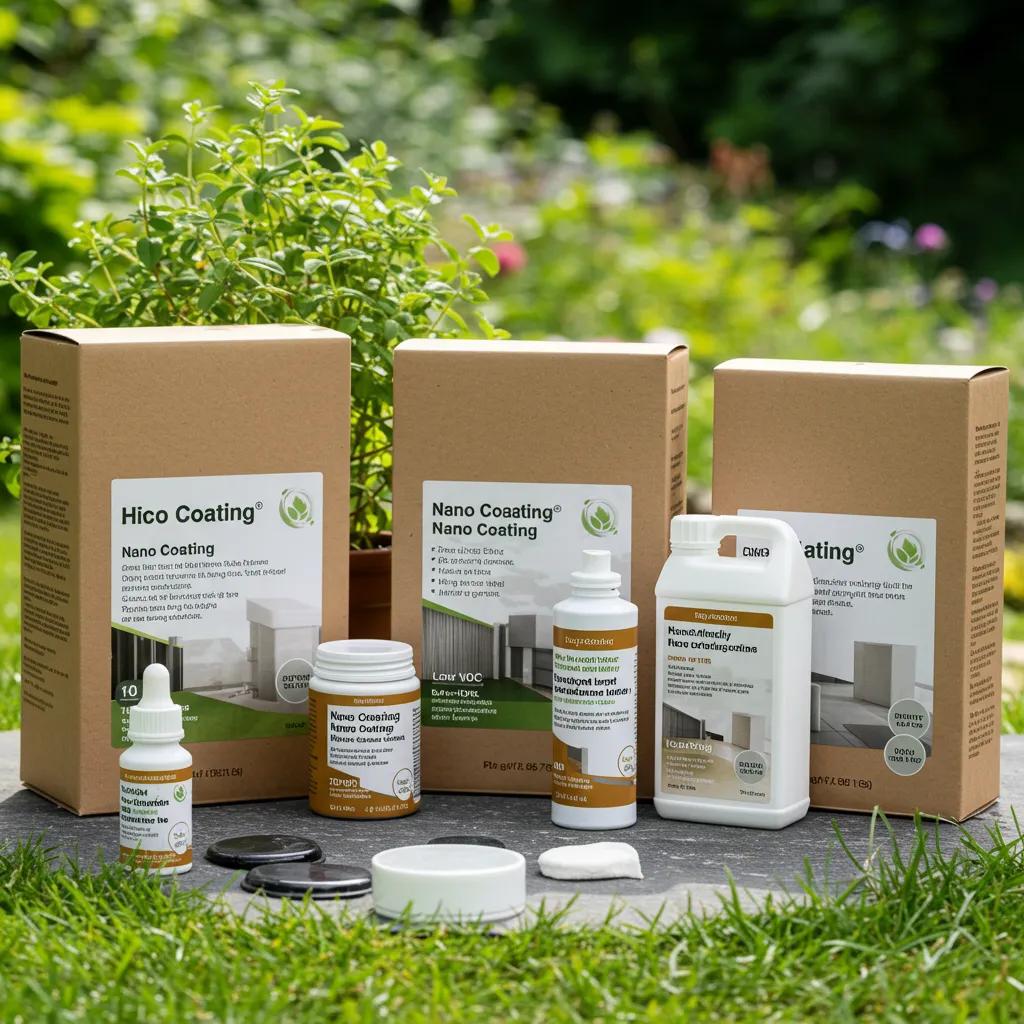
Eco-friendly nano coatings use low-VOC or bio-based formulations that minimize airborne emissions during application and reduce lifecycle environmental impact versus full replacement. By extending roof and surface life, these coatings cut waste destined for landfill and lower embodied-carbon impact associated with manufacturing replacement materials. Homeowners should request product data sheets or certification claims to verify sustainability assertions and prefer formulations described as non-toxic or soy-based when available. Reducing installation waste and avoiding premature replacement also delivers local environmental benefits for London neighborhoods through lower transport, disposal, and material demand.
What Are the Main Benefits of Nano Roof Coating Services in London?
Nano roof coating services deliver multiple quantified benefits: typical lifespan extension of 10–15 years under proper conditions, significant cost savings versus full replacement, improved thermal performance that can reduce HVAC loads, and targeted resilience to London-specific stressors like persistent damp and pollution. These benefits arise from a combined set of protective properties—water repellency, UV shielding, anti-algae performance, and reduced soiling—that slow degradation processes and lower ongoing maintenance requirements. The following table summarizes key benefit entities, attributes, and expected values for quick comparison and decision support.
| Benefit | Mechanism | Typical Value |
|---|---|---|
| Lifespan extension | Reduced UV and moisture-driven degradation | 10–15 years |
| Cost savings vs replacement | Lower upfront and lifecycle costs | Up to 60–90% lower initial expenditure |
| Energy performance | Increased reflectivity / reduced heat gain | HVAC savings variable; measurable in monitoring |
| Biological resistance | Hydrophobic surface + anti-soiling | Fewer cleanings; slower moss/algae growth |
This table highlights how nano coating delivers both direct material protection and indirect economic and environmental value, making it an attractive option for London properties facing climate and pollution stressors.
Nano coatings extend roof life primarily by slowing the physical and chemical processes that degrade materials, including UV-induced polymer breakdown, water ingress, and biological colonization that accelerates wear. The protective film reduces the rate of granule loss on asphalt and shields elastomeric membranes from oxidative damage, which collectively delays the point at which replacement becomes necessary. Evidence from field monitoring and accelerated weathering tests supports multi-year lifespan improvements when coatings are applied with correct preparation, and achieving top-range life extension depends on substrate condition and maintenance.
How nano coating converts those lifespan gains into cost savings depends on roof area, existing condition, and access. Typical commercial pricing bands are influenced by roof size, surface prep needs, and complexity; as a rule, recoating costs are substantially lower than full replacement, often representing a fraction of replacement expenses and delivering a favorable payback period. The next section outlines energy and thermal benefits and how they compound the economic case by lowering heating and cooling loads.
Nano coatings can meaningfully affect thermal performance through increased solar reflectivity and altered emissivity, reducing heat transfer into buildings during warm periods and moderating thermal stress on materials across seasons. Recent studies and industry monitoring indicate HVAC reductions are site-specific but measurable when coatings improve reflectivity and reduce thermal cycling stress. For London homes, even modest reductions in heating and cooling demand can contribute to lifecycle cost savings and improved occupant comfort, especially when combined with other energy-retrofit measures.
This synthesis of benefits frames the practical question of which roof types get the most value from nano coatings, which we examine next to align material compatibility and expected outcomes.
For homeowners interested in professional application, London Home Service offers Nano Coating Solutions tailored to London roofs and surfaces and provides a free inspection to assess suitability and expected benefits.
Which Roof Types Can Benefit from Nano Coating in London?
Nano coatings are compatible with multiple roof materials—each material derives different advantages from nanoparticle-based protection, and suitability depends on surface condition, porosity, and existing damage. Assessing material compatibility ensures coatings bond effectively and deliver the targeted protective properties without compromising ventilation or drainage. The following table summarizes common roof materials, their typical benefits from nano coating, and compatibility notes for London homes.
| Roof Material | Benefit | Compatibility Notes |
|---|---|---|
| Asphalt shingles | UV protection, water-shedding | Best for aging but intact shingles; avoid on heavily delaminated roofs |
| Metal roofs | Anti-corrosion, stain resistance | Ideal with corrosion inhibitors; attention to seams and fasteners |
| Tiled roofs | Water repellency, reduced staining | Works on porous tiles after proper cleaning and priming |
| Elastomeric membranes (flat roofs) | Improved waterproofing, ponding resistance | Requires seam treatment and attention to ponding conditions |
This table clarifies where nano coatings provide maximum value and where caution or repairs are necessary prior to application.
How nano coating works on asphalt shingles centers on sealing micro-voids and reflecting harmful UV, which slows granule loss and brittleness while improving water-shedding performance. Coatings can rejuvenate older but structurally sound shingles by reducing ongoing weathering, though severely cracked or delaminated roofs still require replacement. When determining appropriateness, inspectors should evaluate adhesion potential and recommend repairs if granule loss or substrate instability is present.
For metal and tiled roofs, nano coatings add corrosion resistance to metal substrates and protect tiles from staining and moss colonization by lowering surface energy and reducing water retention. Application must account for thermal expansion on metal and differential adhesion on glazed tiles; primers or specialized formulations often improve long-term adhesion on these substrates. Proper seam and flashing treatment preserves the roof’s engineered water path and prevents coating-induced trapping of moisture.
Flat roofs and elastomeric membranes need special consideration for ponding water and seam integrity; nano coatings can enhance membrane waterproofing when applied following manufacturer guidelines and after addressing existing ponding issues. Surface preparation must ensure membranes are clean and dry within allowable moisture content; seam and flashing detailing is essential to avoid localized failures. Understanding these material-specific requirements prepares a homeowner for realistic outcomes and necessary prep work prior to coating.
How Does Nano Coating Compare to Traditional Roof Replacement and Sealants?
Nano coating differs from traditional replacement and sealant approaches by combining low-thickness, nanoparticle-based surface modification with hydrophobic and UV-resistant chemistry, delivering protection without the waste and cost of full reroofing in many cases. To support decision-making, the table below compares lifecycle, cost, and environmental impact across approaches so London homeowners can weigh trade-offs clearly.
| Approach | Characteristic | Impact |
|---|---|---|
| Nano Coating | Thin-film, nanoparticle barrier | Low waste, lower upfront cost, extends life |
| Traditional Sealants | Thicker polymer layers | Moderate cost, regular reapplication |
| Full Replacement | New materials installed | High cost, high waste, long-term reset |
This comparison highlights how nano coatings reduce material disposal and upfront expense while providing meaningful lifespan gains when substrate condition allows.
Durability differences are primarily about failure modes: nano coatings typically wear thin over long periods and require recoat intervals, while sealants may degrade faster under UV and ponding; replacements reset the lifecycle but at significant cost. Nano coatings aim for maintenance cycles that are less frequent than sealants but shorter than a full replacement lifecycle; recoat intervals and inspection cycles are part of an optimized maintenance plan.
Cost and environmental impacts favor nano coatings in many scenarios because they avoid large amounts of construction waste and reduce embodied carbon associated with manufacturing replacement materials. Upfront cost per square meter is ordinarily lower for coatings versus replacement, and total cost of ownership often favors coating when a roof is in repairable condition. Readers should evaluate the full lifecycle picture—materials, disposal, energy impacts, and expected longevity—before choosing an approach.
Application time and maintenance requirements differ: coatings typically require shorter project windows (surface prep, application, cure) than full replacement, and maintenance is focused on periodic inspection and cleaning rather than structural repairs. Next we outline a practical how-to process for London homes that shows the steps and time estimates to expect during a professional nano coating project.
What Nano Coating Services Are Available Beyond Roofs in London?
Nano coatings extend beyond roofs to protect concrete driveways and patios, wood decks and fences, and other exterior surfaces such as brick, render, and metalwork, providing a unified property-level strategy to reduce maintenance and enhance durability. These services often pair with specialized products like concrete sealer and wood surface protection to address material-specific failure modes. The following list outlines common exterior applications and why they are valuable for London homes, with a summary paragraph after.
Common exterior nano coating applications and their value:
- Driveways and patios: concrete sealer to reduce water ingress and staining, prolonging surface life.
- Wood decks and fences: wood surface protection to prevent rot, UV bleaching, and moisture-driven decay.
- Render, brick, and metalwork: anti-soiling and anti-corrosion coatings to preserve appearance and reduce cleaning frequency.
These application categories provide practical ways to apply nanoparticle-based protection across a property, creating compounding lifecycle benefits and simplifying maintenance for homeowners.
How concrete sealing protects outdoor hardscapes centers on filling pores and repelling oils and water, which reduces cracking from freeze-thaw and prevents staining from oils and pollutants. Effective concrete sealer application requires cleaning, crack repair, and appropriate sealer selection to match traffic and exposure conditions. This reduces long-term repair costs and preserves driveway aesthetics.
Nano-Coating for Cement Durability: Enhancing the Lifespan of Building Materials
Surface treatment methodologies, including surface coating, pore sealing, and impregnation, have demonstrably contributed to improving the durability of cementitious materials, particularly in mitigating surface degradation and damage. Experimental findings suggest that surface coating, functioning as a physical barrier, effectively enhances material durability by impeding the ingress of water or deleterious substances. Given the inherent limitations of experimental observation, there is a pressing need for in-depth investigation at the atomic scale to elucidate the mechanisms underlying the successful hydrophobic behavior of cement surfaces modified with nano-coating treatments.
For wood surfaces, nano coatings function as penetrating or surface films that block moisture uptake and provide UV filters to slow photodegradation; choosing between penetrating wood sealants and surface coatings determines visual finish and re-application cadence. Regular inspection and scheduled re-application extend service life and prevent rot-prone conditions. Homeowners should consider wood species, finish preferences, and local microclimate when planning treatment.
Other exterior surfaces benefit from coatings that reduce soiling and corrosion on metal features and preserve render and brick from pollutant staining; an integrated maintenance plan across surfaces maximizes compound benefits and simplifies future upkeep. Coordinating treatments across roof, hardscapes, and timber creates efficient maintenance windows and increases cumulative lifecycle savings across the property.
How Is Nano Coating Applied: What Is the Process for London Homes?
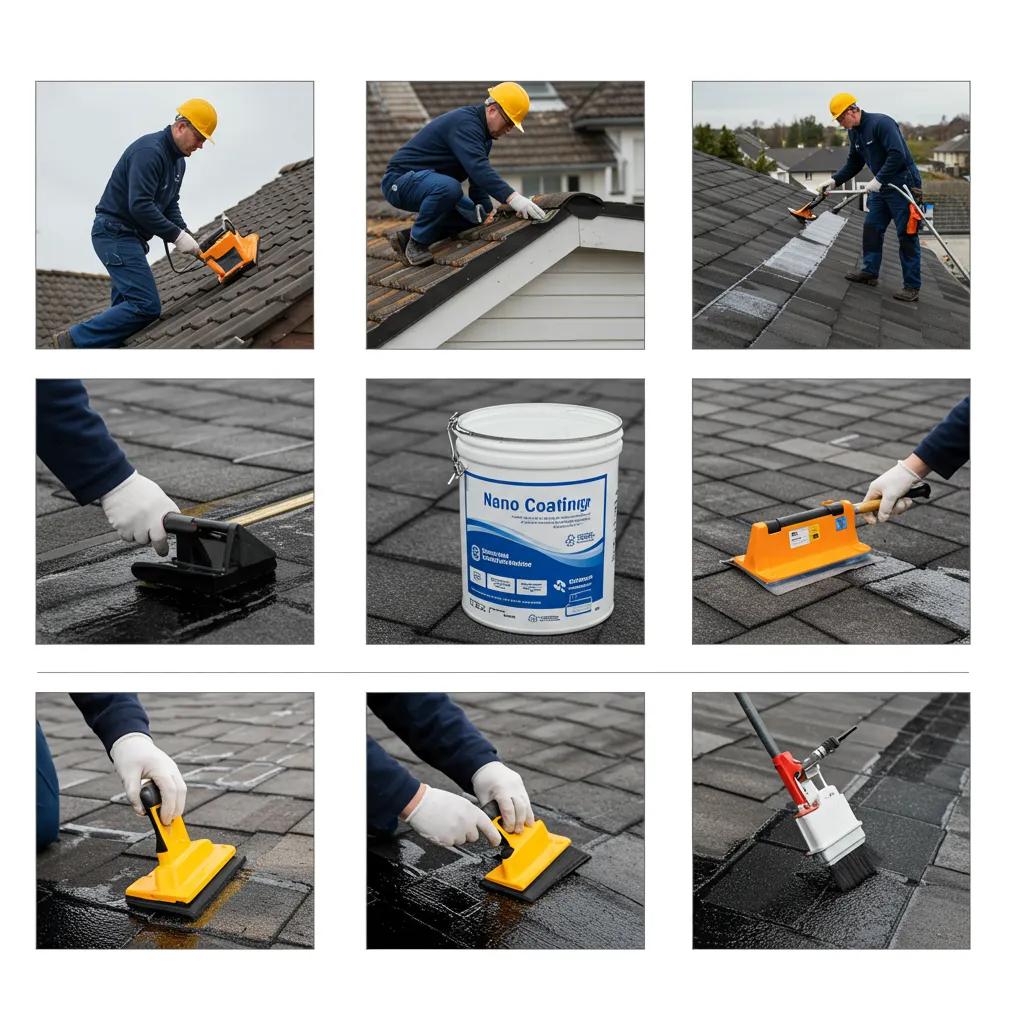
Nano coating application follows a structured process: inspection and assessment, deep cleaning and repairs, controlled application (spray or roll), curing under specified environmental conditions, and post-application quality assurance testing. This stepwise approach ensures adhesion, correct film formation, and measurable protection. The numbered list below presents a professional HowTo-style sequence that homeowners can expect, followed by a paragraph summarizing QA practices that some providers use.
A clear step-by-step application overview:
- Inspection & Assessment: Evaluate substrate condition, porosity, and existing damage to determine suitability.
- Surface Preparation: Pressure wash, remove biological growth, repair cracks, and ensure acceptable moisture levels.
- Priming & Masking: Apply primer where needed and protect adjacent areas to prevent overspray.
- Application: Apply Nano Coating Solutions by spray or roll to specified coverage rates and thickness.
- Curing & Inspection: Allow manufacturer-recommended cure time, then test adhesion and hydrophobic performance.
These steps establish expectations for project duration and quality control; the following paragraphs describe key preparation and professional application details that ensure durable results.
Preparation requires removing dirt, moss, and contaminants and repairing substrate defects so the coating can bond uniformly and form a coherent film. Moisture checks and acceptable dryness thresholds are essential—coatings applied to damp substrates risk adhesion failure—so professionals use moisture meters and set minimum dryness windows before proceeding. Proper cleaning and repair directly influence long-term performance and the likelihood of achieving the projected 10–15 year lifespan extension.
Professional application standards include controlled equipment selection (airless spray, rollers for trims), measured coverage rates to achieve the specified film thickness, and environmental control during curing to avoid rain or rapid temperature shifts. Technicians typically wear PPE and follow manufacturer-specified pot-life and recoat windows to ensure consistent chemistry and bonding. A disciplined application reduces variability and improves predictable service outcomes.
Quality assurance commonly includes post-application adhesion testing, water beading/contact-angle inspection, and documented photos of pre- and post-work condition. Some providers also perform on-site performance checks after a defined period to verify early-stage durability. These QA steps create a record that supports warranty claims and gives homeowners confidence in their investment.
When contractors describe their process, London Home Service cites standard inspection, prep, and on-site testing steps as best-practice examples of professional Nano Coating Solutions application, ensuring surface readiness and post-application verification.
What Are the Typical Costs and FAQs About Nano Coating Services in London?
Nano coating costs vary with roof size, condition, access complexity, and preparation needs, but example pricing bands help homeowners form expectations; common cost drivers include surface repairs, scaffolding or safe access, and the need for primer or sealers on certain substrates. Below is a concise pricing-band illustration and then direct answers to common questions about longevity, safety, and warranties. After the pricing explanation, a short CTA advises readers on requesting a tailored quote from London Home Service.
Typical example pricing bands (illustrative ranges):
- Small, simple pitched roof (repair-minimal): lower band.
- Medium roof with moderate prep: mid band.
- Large or complex access/flat roofs with ponding repairs: upper band.
Factors that increase cost include extensive repairs, scaffolding, high-access complexity, and additional surface-specific products like concrete sealer or wood surface protection. For an accurate assessment and bespoke quote, homeowners are advised to request a site inspection and condition report from a qualified provider.
How long does nano coating last and what maintenance is required? Typical longevity ranges from 10–15 years under recommended conditions, with periodic inspections and gentle cleaning that extend service life. Maintenance involves scheduled visual checks, removal of heavy soiling or debris, and professional recoat when hydrophobic performance measurably declines. Following manufacturer guidance and timely minor repairs preserves the coating’s effectiveness.
Is nano coating safe and eco-friendly? Many formulations are low-VOC and non-toxic, and eco-friendly options (including bio-derived chemistries referenced in industry discussion) reduce environmental impact versus replacement. Homeowners should request product safety data sheets and certification claims to verify low-VOC and non-toxic profiles and avoid unverified claims. This vetting protects occupants and ensures credible environmental benefits.
What warranty and guarantees are offered with nano coating services? Warranty lengths vary; common practices include limited-term coverage for adhesion or material failure and recommended language that specifies pre-existing condition exclusions. Homeowners should require written documentation that details coverage, maintenance obligations, and what constitutes a valid claim. Clear documentation at project start prevents disputes later and clarifies expectations.
For homeowners seeking a tailored estimate, London Home Service can provide a bespoke quote and condition assessment for Nano Coating Solutions, Concrete Sealer, and Wood Surface Protection following an initial inspection.
How Much Does Nano Roof Coating Cost in London?
Nano roof coating costs typically depend on roof area, substrate condition, and required preparation; typical example price ranges are presented as bands to help set expectations. Entry-level projects on small, well-maintained roofs fall into the lower band, while roofs needing repair, scaffolding, or complex access are in higher bands. Ask providers for itemized quotes that separate inspection, prep, materials, and labor so you can compare like-for-like proposals and avoid low-quality offers that underbid preparation.
How Long Does Nano Coating Last and What Maintenance Is Required?
Nano coatings commonly last 10–15 years when applied to suitable substrates and maintained with periodic cleaning and inspections. Maintenance tasks include annual visual checks, gentle cleaning of soiled areas, and professional inspection every few years to assess contact-angle performance; recoat intervals depend on observed wear and environmental exposure. Timely minor repairs and avoiding heavy chemical cleaners help preserve protective properties and maximize service life.
Is Nano Coating Safe and Eco-Friendly for My Home?
Many nano coating formulations marketed for residential use are designed to be low-VOC and non-toxic, reducing application-time emissions and occupant exposure compared with solvent-heavy alternatives. To verify eco-friendly claims, request product safety data sheets, ask about VOC limits, and inquire whether formulations include bio-based chemistries noted in industry discussions. Verifiable documentation ensures both safety and environmental credibility.
What Warranty and Guarantees Are Offered with Nano Coating Services?
Warranties commonly cover workmanship and coating performance for a defined period and often require documented pre-application condition reports and adherence to maintenance schedules. Homeowners should require written warranty terms that clearly state coverage duration, exclusions (such as pre-existing structural issues), and the process for making claims. Proper documentation at project start supports long-term value and accountability.
